Blog
What to Wear to Highland Games: A Complete Dress Guide

What are the Highland Games?
Highland Games are festivals rooted in ancient Scottish and Celtic tradition, featuring athletic events like the caber toss, hammer throw, and tug-of-war — alongside pipe bands, Highland dancing, and clan gatherings. Events are held worldwide, from Edinburgh and Inverness to Melbourne, New Zealand, and cities across North America.
The atmosphere is festive, proud, and deeply communal. Your attire is part of the celebration — a way of honouring Celtic heritage, not just watching it from the sidelines.
The dress code: formal, semi-formal, or casual?
Most Highland Games don’t enforce a strict dress code — but there is a spectrum. Your choice depends on your role at the event:
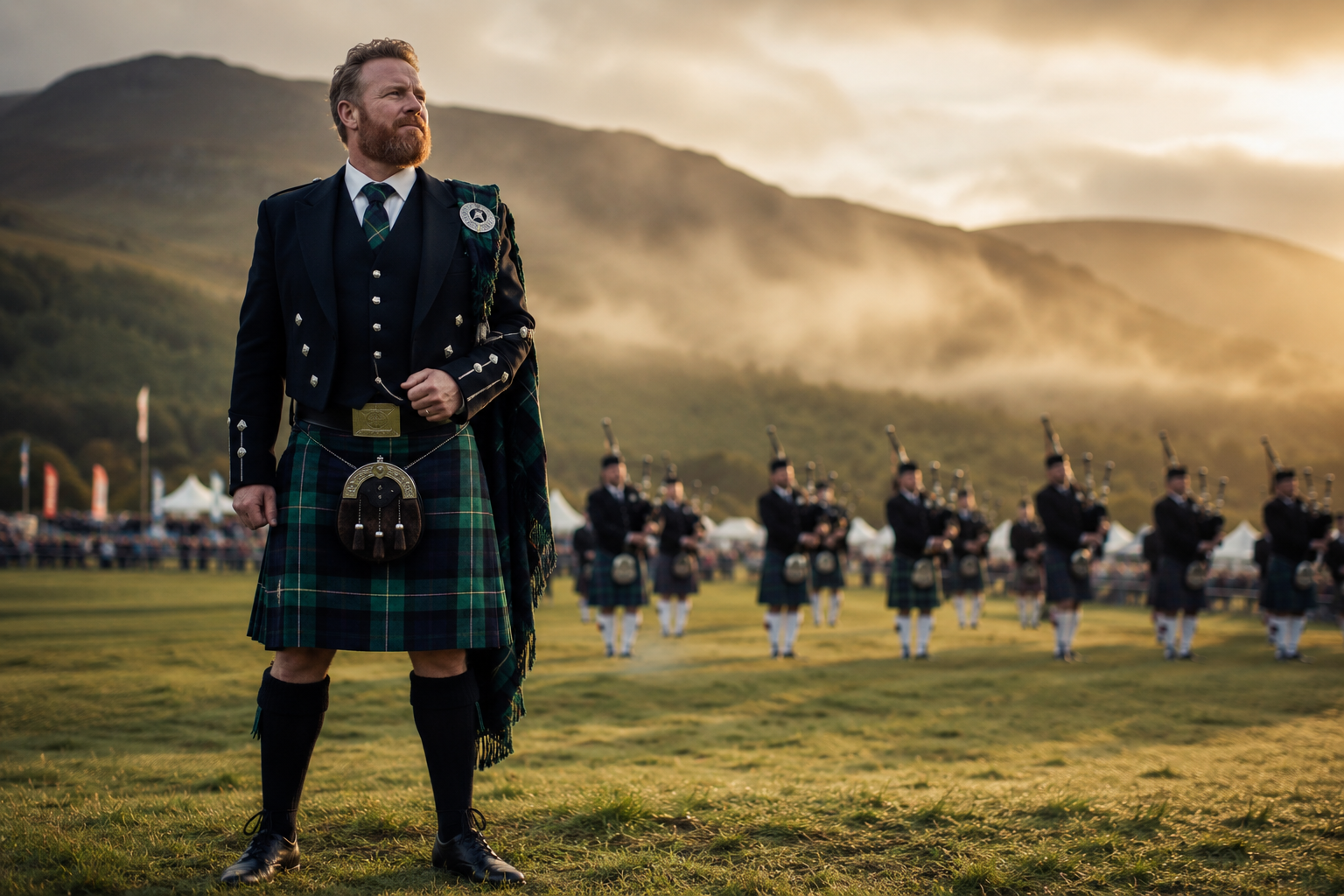
Full Highland Dress
For competitors, clan chiefs, pipers, and those who want to go all out. Kilt, jacket, sporran, hose, and ghillie brogues.
Semi-formal
Kilt with a plain or tartan shirt, casual belt, and boots. Smart but comfortable — ideal for spectators who want to participate in the spirit.
Tartan Casual
Tartan trousers, a tartan scarf, or a tartan cap paired with everyday clothing. A great entry point if you’re new to the culture.
The essential pieces: what to wear
If you’re going for a traditional Highland look, these are the key garments to know:
- The Kilt — The centrepiece. Always made from wool tartan, pleated at the back and flat at the front. Choose your clan tartan if you have Scottish heritage, or a universal tartan like Black Watch or Royal Stewart.
- The Sporran — A leather or fur pouch worn at the front of the kilt. It serves as your pocket. Dress sporrans have a metal cantle and chain; day sporrans are simpler leather.
- Kilt Hose — Thick wool socks that reach just below the knee, usually cream or white. Folded over at the top and held with garter flashes in your tartan’s colour.
- Ghillie Brogues — Traditional lace-up leather shoes with long laces that wrap around the ankle. The most authentic footwear for Highland dress.
- Kilt Jacket — For formal wear, a Prince Charlie jacket (black with silver buttons) or an Argyll jacket (tweed or wool) is standard. For casual wear, a simple fitted shirt works well.
- Kilt Belt & Buckle — A wide leather belt with a large decorative buckle, worn through the kilt’s belt loops. Adds structure and a polished finish.
- Sgian-dubh — A small ceremonial knife tucked into the top of the right kilt hose. Mostly ornamental today, but an important traditional accessory.
Choosing your tartan
Tartan is the heart of Highland dress — a woven pattern of intersecting coloured stripes with deep cultural meaning. Each clan, regiment, and district has its own registered tartan, and choosing one is a personal and meaningful decision.
Here are a few options depending on your background:
- Your clan tartan — If you have Scottish ancestry, look up your family name in the Scottish Register of Tartans. Wearing your family tartan is a proud and personal choice.
- District tartans — Tied to a region rather than a family. Anyone with a connection to that area can wear them.
- Universal tartans — Patterns like Royal Stewart, Black Watch, or Ancient Hunting are widely worn by anyone regardless of heritage. Perfect for newcomers.
- Fashion tartans — Contemporary designers have created tartans in modern colourways — navy and gold, grey and burgundy — that honour the tradition while fitting a modern wardrobe.
Dressing for the weather
Highland Games are typically held outdoors from spring through early autumn. Scottish weather — and weather at games events worldwide — can be unpredictable. Here’s how to dress smart:
Sunny day
Lightweight linen shirt under your jacket. Skip the waistcoat if it’s warm.
Cool or overcast
Layer a tartan waistcoat or a fitted wool jumper under your jacket.
Rain likely
A short wax or wool cape (fly plaid) over the shoulder adds authenticity and keeps you dry.
Wool tartan is naturally water-resistant and temperature-regulating — one of the many reasons it has remained the fabric of choice for centuries of outdoor Scottish life.
For women: Celtic style at Highland Games
Highland dress is not just for men. Women have a rich tradition of tartan dress with equally striking options:
- Tartan skirt or kilt — A midi or full-length tartan skirt is the female equivalent of the kilt, often pleated and worn with a fitted blouse or jacket.
- Fly plaid — A large square of tartan fabric draped over the left shoulder and pinned with a Celtic brooch. Elegant and dramatic.
- Tartan sash — A lighter option: a long tartan sash pinned at the shoulder over a plain dress or blouse. Clan sashes are traditionally worn on the right shoulder.
- Celtic jewellery — Knotwork brooches, thistle pins, and Claddagh pieces complement Highland dress beautifully.
What NOT to wear
A few things to keep in mind so you show up looking respectful and polished:
- Avoid wearing a clan tartan you have no connection to if you’re unsure — opt for a universal tartan instead.
- Don’t pair a formal kilt jacket with trainers or casual sneakers — it breaks the look entirely.
- Avoid plastic or novelty “tartan” items — cheap printed fabric doesn’t do justice to the tradition.
- Don’t underdress if you’re participating as a competitor or in a pipe band — full Highland dress is expected.
Final checklist before you go
- Kilt in your chosen tartan, properly pleated and pressed
- Kilt pin secured on the front apron
- Sporran worn centrally on a chain or leather strap
- Kilt hose with garter flashes showing 1–2 inches below the fold
- Ghillie brogues or sturdy leather shoes
- Jacket, waistcoat, or smart shirt depending on formality
- Sgian-dubh in right hose (if permitted at the event)
- Celtic brooch or pin for any sash or plaid
- Layer for changing weather